Operational Review and Gatehouse Training Program
Resource Hub arrived in Adelaide for a scheduled operational review and gatehouse training program with SRWRA — and within 24 hours, the plan had changed completely. What followed was two days of rapid problem-solving, hands-on gatehouse training with the executive leadership team, and a set of fixes that had been quietly accepted as a headache for years.
A Job That Didn’t Go to Plan
SRWRA engaged Resource Hub for a two-part engagement: a full operational review of their waste facility, followed by structured gatehouse training for frontline staff. Resource Hub was already in Adelaide for the Women of Waste event and to deliver the project when a call came through the evening before the engagement was due to begin.
Half the SRWRA team were sick. Staff members had family emergencies. The people needed for training simply weren’t going to be there. And there was a bridge calibration timing change, now scheduled during weighbridge training.
Rather than rescheduling, Resource Hub pivoted on the spot.
Pivot, Problem-Solve, Repeat
Day one proceeded as planned: a full operational review of the facility. Working with backup staff — including SRWRA’s CEO and senior leadership — proved to be an unexpected advantage. Backup staff interactions surface a different kind of insight: the gaps that regular staff navigate on instinct but that aren’t written down anywhere, and that become real problems the moment those staff aren’t available.
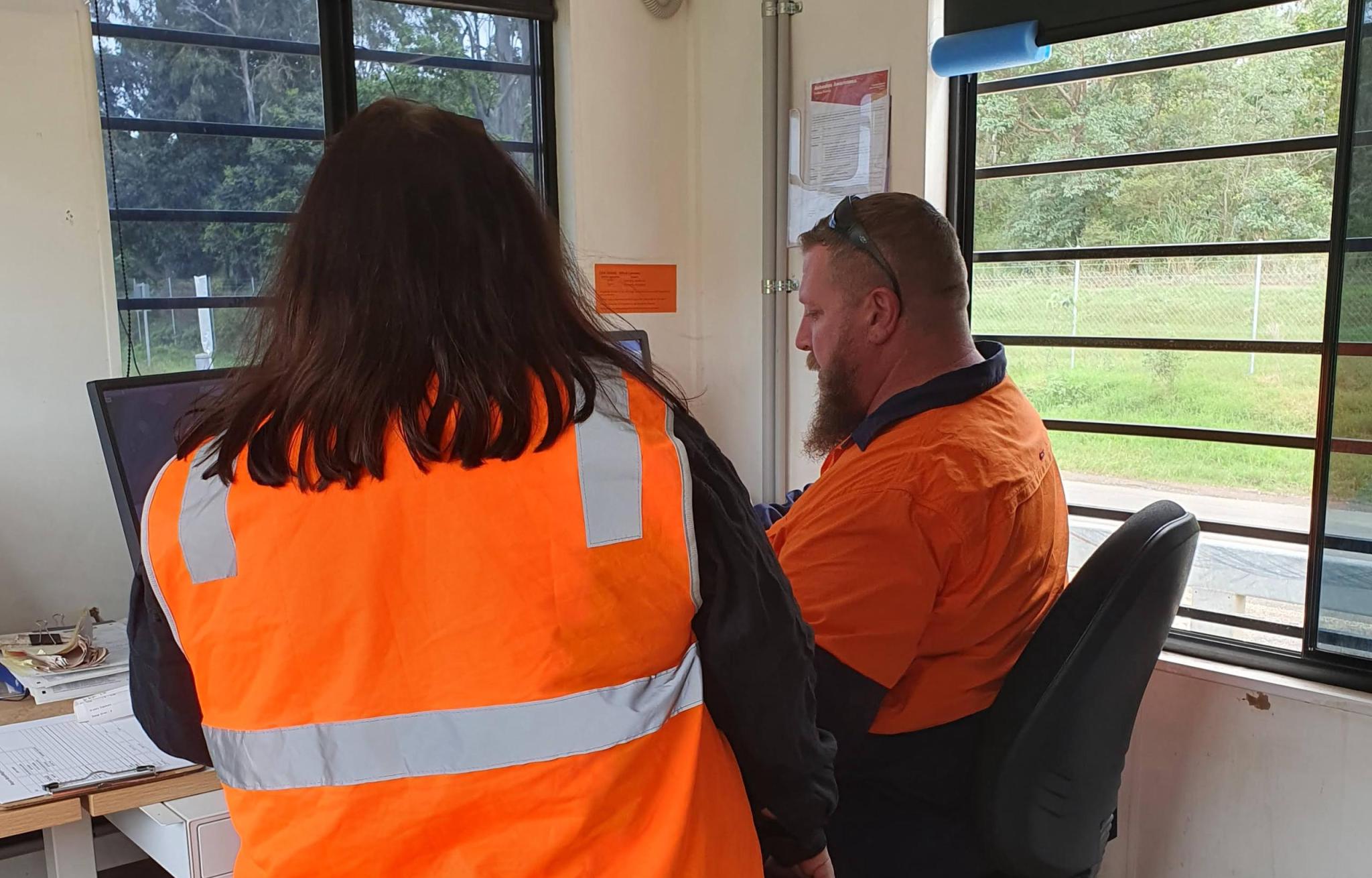
On day two, instead of running gatehouse training with frontline operators, Resource Hub spent the morning with the executive leadership team — working through findings from the review, running waste levy reports, and building new process routines. Then, once trucks had cleared, they moved to the gatehouse and trained the CEO and senior leaders in how to run it!
Leadership learned how to inspect loads, manage customer interactions, process payments, and handle the unexpected — the kind of curly questions that arrive with every domestic vehicle and mixed load. For the leadership team, it was a window into a part of the operation they rarely see directly. And it quickly revealed something important: the organisation had a lot of good routines, but many of them existed only in the heads of experienced staff, not in documented processes.
There was also the unplanned complication on day two: weighbridge calibration schedule at a new unexpected time, locked the team out of the gatehouse system for two hours. Resource Hub used the time to start fixing things identified the previous day. That time was not wasted.
Fixing the Accepted Headaches
The most tangible outcomes of the pivot came from the problem-solving work that replaced the original training plan. Among the fixes:
- A finance export issue was resolved: transactions were being dropped from SRWRA’s finance file due to a decimal place configuration error, forcing manual manipulation every month. Fixed in a couple of hours.
- Waste levy returns — which had accumulated issues — were taken on by Resource Hub for four months while new routines were built, tested, and handed back with confidence.
- Client-facing reporting was identified as the next improvement opportunity and is now being standardised so that all client reports follow a consistent format.
- Backup routines were mapped out — the processes that need to exist not just for regular staff, but for the scenarios where the regular staff aren’t there.
The engagement also highlighted how much daily problem-solving happens in waste operations that can be invisible to leadership — and how valuable it can be to actually stand in the gatehouse and experience that directly.
Things Not Going to Plan Changes The Value Proposition
The SRWRA engagement is a good example of what a genuinely flexible consulting relationship looks like. When the original plan became impossible, Resource Hub didn’t go home. They asked what was actually needed that day, and delivered that instead.
The accepted headaches that had been living in the background for months — the finance export, the levy returns, the informal training routines — got fixed not because they were on the agenda, but because there was space to find them. That’s what happens when you bring the right people into a room with the right mindset.